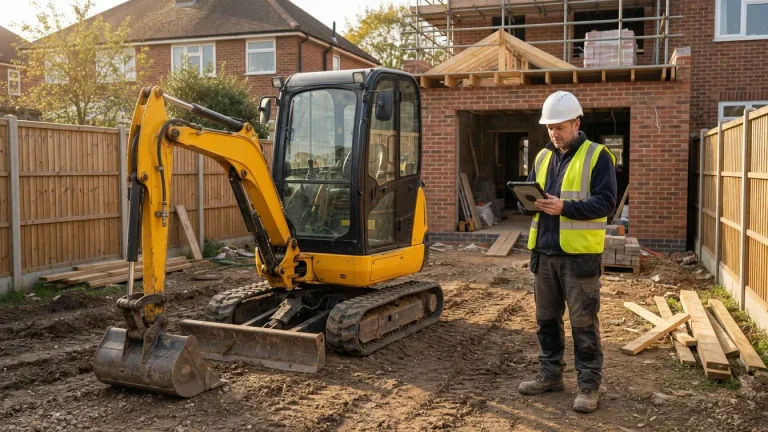
Quick Answer: Plant insurance cover protects machinery you own or hire against theft, fire and accidental damage, and for hired in plant it deals with your hire agreement obligations and ongoing hire costs. It is not a UK legal requirement. However, employers' liability is compulsory if you have staff, and plant used on public roads needs motor insurance.
If you have ever signed for a piece of plant to hire and were concerned about what would happen if it was stolen from your site on a Friday night then read on. Plant insurance is notoriously poorly understood. Many wrongly assume that the hire company’s insurance extends to them. In fact there can be a very significant coverage gap.
This section sets out what is regarded as plant; the difference between owning and hiring in plant; the obligations within a hire agreement; the effect of security conditions and details of what is and isn’t covered. It will also explain costs and show you how to claim effectively to avoid costly errors.
What is Plant and Machinery Insurance?
This is to secure physical loss or damage to the plant (machinery) used in construction and ground engineering. It is additional to other insurance policies and does not replace them. It is the machinery which is being insured. It does not cover personal injury, consequential property damage or loss of work – each of which is separately insured for.
Own Plant and Hired-In Plant Insurance
This is by far the key distinction. The two types of insurance protect against very different issues.
Own plant insurance is for machinery that you either wholly own or have on finance. It is essentially insuring an asset (usually for re-placement value) against theft, fire and accidental damage.
Hired-in plant insurance is for your obligations within a hire agreement for plant which you do not own. It is for the amount that you would have to pay to the owner for loss or damage to the machinery which is in your care.
Should you both own and hire-in plant, in most cases you would require both types of insurance. However, many insurers allow these to be listed on the same schedule.
What Counts as ‘Plant’?
Most mechanical items which are used on a construction or ground engineering site will be considered plant. This includes:
- Excavators and mini excavators.
- Dumpers and site vehicles.
- Telehandlers.
- Rollers and compaction machinery.
- Compressors and generators.
- Scissor and cherry pickers.
- Cranes and lifting equipment.
- Site hand attachments (e.g. buckets, breakers and augurs) and hand held tools.
Whilst an insurer will determine what is defined as plant, ensure your machinery is listed on your schedule.
Hand Held Tools
These are often not covered or only partially covered by plant insurance. Although relatively inexpensive, hand held tools such as drills, saws and laser levels are easily taken and can prove costly to replace. However, again, they present a very different risk to, for example, a 3 tonne excavator. If your van is laden with power tools then you will likely wish to obtain specific hand tool insurance rather than rely on your plant insurance.
Does the Hire Company’s Insurance Extend to the Hirer? (Damage Waiver Pitfall)
Generally not. The hire company insures its own stock and not you. According to the usual Construction Plant-hire Association (CPA) hire agreement, it is the hirer’s responsibility to insure themselves against loss or damage to plant, unless this is specifically stated otherwise in writing.
Many hire companies also offer a damage waiver service for an extra charge and this can reduce the hirer’s obligation. But note that this is not insurance. Waivers frequently include an excess and do not cover theft (other than from forced entry). Misuse is also not covered and many do not pay out for ongoing hire costs. Furthermore, as well as being charged per hire, these can accumulate.
If you do not hire in frequently then a waiver may be suitable. However, if you hire in regularly, your own hired-in plant insurance is usually broader and better value.
Hired-In Plant and CPA Contract Liability Provisions
The CPA Model Conditions are widely used by UK business hire companies for plant hire. Further information can be found on the CPA hire conditions page. Of particular importance is the provision relating to the hirer’s liability for loss or damage. Essentially, it is your responsibility to compensate for any loss or damage (apart from normal wear and tear) to the plant. During this period, ongoing hire costs will continue to be payable at idle time rates.
It is the phrase ‘any cause’ which causes problems. Irrespective of whether or not you have been negligent, if plant is stolen or damaged on your site then you are liable.
What You May Be Responsible For Paying the Hire Company
| Responsibility | Payable for |
|---|---|
| Repair or re-placement | To pay for repair or re-placement of the plant |
| Ongoing hire costs | Ongoing hire continues to be payable whilst the plant is being repaired or replaced |
| Loss of earnings and recovery | To compensate the plant owner for lost earnings and to pay for recovery of non-operational plant |
| Damage waiver exclusions | Generally, damage waivers do not fully cover all loss and/or ongoing hire costs |
Ongoing Hire Costs and the 90-Day Policy Cap
Unfortunately, even if plant is stolen or written off, you still have to pay ongoing hire costs. These are payable to enable the owner to re-place or repair the machinery. Specialist plant can take several months to source.
As they recognise this, many insurers provide for an ongoing hire costs element of hired-in plant insurance. Usually there is both a time (often around 90 days) and monetary limit in place. Should the claim exceed either of these, you will have to meet the excess.
Example of where there is a shortfall:
- Daily hire rate = £250
- Incident = Mini excavator is stolen and written off.
- Replacement time = 12 weeks (84 days).
- Exposure to ongoing hire costs = 84 x 250 = £21,000.
- Policy ongoing hire costs limit = £15,000.
- Uninsured shortfall = £6,000. Plus your excess and recovery costs.
Although the 90-day time limit is not exceeded in this example, it is the monetary policy cap which leads to the shortfall. Both could be exceeded if there was a lengthy replacement period. Moreover, under CPA terms, ongoing hire costs are often payable at a discounted ‘idle time’ rate and not at the full daily rate. So check your hire agreement. Either way, always examine both the time and monetary policy caps.
What Does Plant Insurance Cover? (Scope and Inclusions)
Typical Inclusions
Plant insurance will generally provide cover against:
- Theft (subject to security conditions)
- Fire and explosions
- Flood and bad weather
- Malicious damage
- Accidental damage e.g. collision or unexpected fall
Again, always review your schedule as not all of these will necessarily be included on lower cost policies.
Plant in Transit and Road Transport
Transporting plant can be especially risky. Plant in transit provision usually relates to loading and unloading machinery and then transporting it on a trailer or lorry to another site. Consider:
- Whether loading and unloading is covered.
- Whether transport between your sites and client’s sites is covered.
- Whether or not the transport vehicle requires its own motor insurance (it will).
Damage to plant is a distinct issue from damage to the transport vehicle.
Off Site Plant Storage and Security Conditions
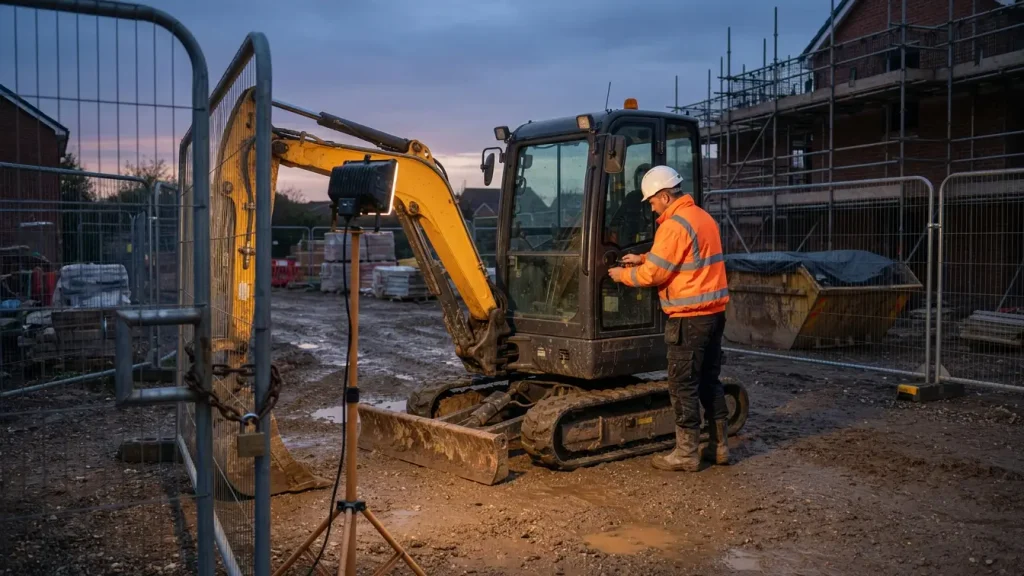
An insurer will be interested in where your plant is stored. Generally, it is easier to insure machinery which is kept in a locked yard than in an open field. Expect scrutiny of security features such as fencing, lighting and locked compounds. Staff presence will also be relevant. Failure to comply with security conditions can result in theft claims being disallowed.
Over-turning and Attachments
Certain plant, such as excavators, dumpers and telehandlers, can over-turn. Ensure that this is covered and that there are no restrictions on the ground conditions for which it is insured.
Attachments such as buckets, hydraulic breakers, augurs and quick hitches can also be highly valuable and are easy to steal. If these are not listed on your schedule then they may not be insured at all.
Policy Exclusions, Excesses and Security Conditions for Theft Claims
Common Exclusions
Commonly, plant insurance will not pay for:
- Normal wear and tear
- Mechanical and/or electrical failure
- Damage resulting from improper use e.g. exceeding recommended working capacity
- Intentional acts by the assured
- Non-compliance with security conditions
Whilst mechanical failure might not initially spring to mind as something to exclude, for instance, failure of a hydraulic pump would constitute a repair or warranty issue and not an insurance concern.
Security Conditions for Theft Claims
The most common type of plant claim is for theft. Again, most disallowance of claims arises from non-compliance with security conditions. Commonly required security provisions are:
- Key control – secure storage of keys and removal from plant overnight.
- Vehicle tracking and anti-theft – functional GPS, alarms and/or anti-theft devices.
- Site security – fencing, lighting and/or named night time personnel for unattended sites.
- Plant transport – no storage of plant on open trailers, on public roads or in un-fenced compounds.
- Crime Reference Number – report theft and obtain a number immediately.
- Attachment listings – ensure buckets, breakers and quick-hitches are listed on your schedule.
- Internal theft – confirm how internal theft (by staff and/or sub-contractors) is dealt with.
Please review these prior to purchasing insurance. If you cannot practically comply with any security condition, inform your broker and request amendment of the policy conditions.
Excesses
These can differ more than is often realised. There may be different excesses for:
- Own and hired-in plant
- Theft and accidental damage
- Ongoing hire costs
Although increasing excesses reduces premiums, it will increase the amount that you have to pay for claims. Therefore choose an excess which you can comfortably afford to meet, even on a poor business day.
Construction Insurance: Which Policy Covers What?
As previously mentioned, plant insurance only covers plant. Around this there are other policies and confusion can arise from misunderstanding which policy should be used for what.
Separating Plant, Contract Works, Public and Employers’ Liability
- Plant – machinery
- Contract works – the construction, materials and partial work product
- Public liability – personal injury and/or property damage to third parties as a result of your work. To find out more about the documentation which clients often request, please refer to our guide to the public liability insurance certificate UK.
- Employers’ liability – personal injury to your employees
Which Policy Covers What?
| Event | Usually covered by… |
|---|---|
| Stolen hired-in excavator | Hired in plant (and possibly contract works if the theft occurs on site) |
| Excavator damaging neighbour’s property | Public liability |
| Staff injured whilst using plant | Employers’ liability |
| Partly completed extension destroyed by fire | Contract works |
| Plant damaged during transport | Plant in transit or motor insurance |
Transport and Road Risk Regulations
When plant is transported on public roads then motor insurance is relevant. Vehicles which are operated on public roads must be insured under the Road Traffic Act 1988. Furthermore, some plant is deemed to be a motor vehicle if it is driven on public roads. Typical examples are telehandlers and forklifts which are transported from one site to another. General guidelines on vehicle insurance can be found on the GOV.UK website. However, consult your broker to ascertain how your machinery is categorised.
Although inter-related, it is important to distinguish between plant in transit, motor road risk and goods in transit (the contents of a vehicle).
Short and Annual Term Plant Hire Insurance
Single Project and 12 Month Policies
Usually, you can purchase either:
- Short term policies – often available from a week, which are appropriate for one-off plant hire. Again, some specialist brokers provide these. However, some larger insurers only provide annual term policies.
- Longer 12 month term policies – appropriate for frequent hirers.
Which Policy to Choose?
| Situation | Best policy type |
|---|---|
| Occasional hire / single project | Short term hired-in plant |
| Frequent hirer | Annual hired-in plant |
| High value plant | Annual policy with bespoke indemnity limits |
| Own plant | Annual own plant |
| Own and hire | Combined own and hired-in plant schedule |
Typically, a few times per year is where the point moves to annual term policies being generally cheaper than repeatedly paying for damage waivers.
Industry Specific Situations and Sectors
Sole Traders and Tradespeople and Mini Excavators
Before hiring in a mini excavator, review the hire agreement. Consider the excess, permitted operators and whether your public liability policy covers the work. As a sole trader, one large claim can outweigh an annual trading profit. Thus it is advisable to cost up your insurance. If self employed, you may also wish to consider personal health insurance. See our guide to medical insurance UK for more information.
Groundworkers and Civils Contractors
Groundworkers face the greatest risk. This is due to factors including deep excavation, over turning, the use of hydraulic breakers and hitting underground services. Your plant, contract works and public liability insurance all need to be coordinated. Often issues relating to underground services fall into a grey area between these different policies so enquire how each policy addresses this.
Crane and Heavy Lifting
There are more stringent requirements for lifting. Typically insurers wish to ensure that operatives are suitably qualified and that lifting plans are in place. Additional endorsements can also be required. As with other sectors, the greater the plant value the more significant sum insured limits become.
Landscapers, Tree Surgeons and Event Organisers
This sector utilises a range of machinery including wood chippers, stump grinders and generators, together with light fittings and temporary buildings. Not only is this equipment often mobile, but it can also be highly desirable for thieves. Ensure that all items are listed on your schedule and that your insurance covers them for the sites that you work at.
Plant Hire Businesses and Fleet Insurance
Should you engage in plant hire then you need fleet insurance. This must address your whole fleet, your hire company conditions, your off hire inspection process and your damage waiver provisions. As this is highly specialised, seek the services of a broker who works with hire firms.
Businesses with Employees (Compulsory Employers’ Liability Insurance)
As noted above, plant insurance does not fulfil your legal obligations in relation to employees. Generally, if you have staff then you will need to have employers’ liability insurance of at least £5 million. Information on employers’ liability insurance can be found on the GOV.UK website. Uninsured businesses can face fines of up to £2,500 per day. The Health and Safety Executive also provides basic guidance.
Furthermore, if you are self employed and your family relies upon your income then in addition to business insurance, you may also wish to consider personal life insurance (particularly for mum’s if you are a parent).
How Much does Plant Insurance Cost in the UK? (2026 Influencing Factors)
It is simply too broad to give an accurate general figure for plant insurance costs. There is considerable variation in the value, trade and security arrangements of machinery. Again, your broker will be able to most accurately advise you on costs having seen your schedule. Understandably, however, you can identify factors which will affect costs.
Main Influencing Factors
- Value of machinery
- Own or hire-in – own plant is valued for insurance purposes. Hired-in plant is often valued according to your annual hire expenditure.
- Annual hire expenditure (for frequent hirers).
- Site and storage security.
- Trade – ground works and demolition are generally more costly to insure than landscaping.
- Claims history.
- Excesses.
- Additional cover – ongoing hire costs, plant in transit and attachments.
General Machinery Values
High value and/or highly theft-prone machinery will generally incur higher insurance costs. Mini excavators and compact excavators are particularly prone to theft and so often require the inclusion of GPS and anti-theft devices on the machinery. Larger and forklift plant also incurs greater insurance costs due to its value and in some cases, road use. Quick methods of reducing costs include fitting GPS devices, storing machinery securely and maintaining a clean claims record.
Generally, insurance costs can be claimed as business expenses. Ensure that your insurance papers are retained alongside your accounts. Self employed individuals can claim as explained on the GOV.UK website. Limited companies adhere to similar principles.
How to Make a Plant Insurance Claim
Effectively making a claim involves the following steps, ideally undertaken within the first hour of an incident:
- Secure the site and ensure it is safe. Prevent further loss or damage.
- Inform the police. Immediately report theft and/or arson incidents and obtain a Crime Reference Number.
- Notify your insurer and hire company. Quickly and do not commence repair work until you have been advised that this can be done.
- Gather evidence. Photographs, CCTV, hire and delivery notes together with maintenance records are all helpful.
- Obtain valuations. Secure formal repair quotations or documentation of a write-off.
- Record ongoing hire costs. Maintain a daily log of hire and downtime expenditure.
Should your claim be rejected and you believe this to be unjust then initially make a complaint to your insurer. You can then appeal to the Financial Ombudsman Service. Furthermore, you can check that an insurer or broker is authorised via the FCA Register.
Common Queries
Is plant insurance legally required in the UK?
No. Although employers’ liability insurance is compulsory if you have employees, and motor insurance is required for plant which is operated on public roads, plant insurance itself is not.
What is hired-in plant insurance and how are ongoing hire costs calculated?
Hired-in plant insurance is for your contractual obligation to compensate for loss, theft or damage to hired machinery. Ongoing hire costs are the hire charges payable to the hire company for the period that plant is undergoing repair or re-placement. These are usually based on your hire agreement and are often restricted both by time (for example to 90 days) and money.
Does own plant insurance extend to off-site and in transit plant?
Often yes. However, this will depend upon compliance with security conditions together with geographical and in transit restrictions. Always investigate your policy to verify this.
How does plant insurance differ from contract works insurance?
Whilst plant insurance is for machinery, contract works insurance is for the building, materials and incomplete output. It provides cover against accidental damage and fire.
Can I obtain short term plant hire insurance for a single project?
Yes. Again, specialist brokers can provide short term insurance (generally from around one week). Yet some larger insurers only provide annual term policies.
Does plant insurance provide cover for mechanical failure?
No. Mechanical failure, alongside wear and tear and slow degradation, are commonly excluded from plant insurance.
Will plant insurance cover theft from a construction site?
This will depend upon your policy and whether you have complied with security conditions. These often include fencing, anti-theft devices and key control. Non-compliance can lead to a claim being rejected.
Does plant insurance cover damage caused by staff?
Plant can in general be covered for damage. However, staff injuries are the remit of employers’ liability insurance and property damage to third parties is dealt with under public liability insurance.
Is public liability insurance necessary if I have plant insurance?
Yes. As plant insurance only insures machinery, public liability is for claims of third party personal injury and/or property damage stemming from your work.
What points should I consider when hiring in a mini excavator or excavator?
Review the hire agreement, excess, ongoing hire costs exclusions and the replacement value of the machinery. For further assistance in comparing insurance, visit Insurtive.