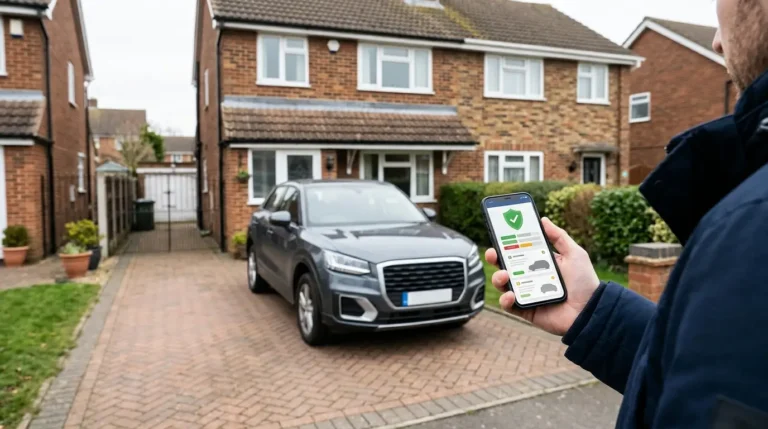
Plenty of people think insurance only matters when the wheels are turning. It doesn’t. If you’re asking when must your vehicle have valid insurance cover, the honest answer is “pretty much always, unless you’ve told the DVLA it’s off the road.”
The rules sit mainly in Section 143 of the Road Traffic Act 1988, which makes it an offence to use a vehicle on a road without insurance. The keeper side comes from the Road Safety Act 2006, which added sections 144A to 144D to the same Act. Those provisions created what’s known as Continuous Insurance Enforcement and came into force in February 2011. You can read the keeper offence itself in section 144A.
This guide covers the legal triggers, the exemptions, what happens if you get caught, and the traps that catch out otherwise careful drivers.
Quick answer: Your vehicle must have valid insurance whenever it's driven or used on a road or public place, and whenever it's kept in England, Scotland or Wales without a SORN. The registered keeper is responsible even if the car never moves. In practice, the only ways out are a Statutory Off Road Notification (SORN) or one of a handful of specific exemptions, such as a car that's between keepers or in the motor trade.
The Golden Rule: Drive It or Keep It, Insure It
Continuous Insurance Enforcement (CIE)
Continuous Insurance Enforcement means a vehicle must stay insured at all times, even when it’s parked, broken down or not being used, unless it has a SORN. It’s a keeper offence, so it applies to whoever is registered with the DVLA.
The idea behind it is simple. Before 2011, you could only be caught if you were driving. Now an uninsured car sitting outside your house is enough. GOV.UK’s guidance on uninsured vehicles sets out the exceptions, which we’ll go through below.
The Two Legal Triggers for Required Cover
Insurance is legally required whenever either of these is true:
- The vehicle is driven or used on a road or public place.
- The vehicle is kept by a UK keeper, or registered, without an active SORN.
The second one is where people get caught out. You can leave a car on your driveway for six months and never turn the engine on, and you’ll still be committing an offence if it’s uninsured and has no SORN.
Registered Keeper vs. Driver Responsibility
Two different people can be in trouble for the same uninsured car, and the offences are separate.
- The registered keeper is responsible for keeping the vehicle insured. If it isn’t, they face the CIE penalty.
- The driver is prosecuted for driving without insurance, which is a separate and more serious offence.
- Anyone who lets someone else drive a vehicle they know is uninsured can also be committing an offence.
And “I thought the owner had sorted it” doesn’t work as a defence. GOV.UK’s page on driving without insurance is clear that the offence applies to the driver even when the car is insured by someone else.
Impact of Uninsured Driving in the UK
Uninsured driving is a bigger problem than most people realise. The Motor Insurers’ Bureau (MIB) says there are around 300,000 uninsured vehicles on UK roads on an average day, and more than a million across a full year. You can see its latest numbers in The difference MIB makes in numbers.
Honest drivers end up paying for it. The MIB funds claims caused by uninsured drivers, and the cost is passed on through insurance premiums. Older guides quote a figure of about £30 per policy per year, but that’s a dated government estimate, so treat it as a rough guide only.
Where and When Insurance Is Legally Required
Defining “Roads and Public Places”
The law doesn’t stop at the public highway. It covers places the public can access, which in practice includes supermarket car parks, retail parks and some stretches of public land.
That matters for two reasons. If you’re driving in a car park, you need insurance. And a vehicle with a SORN can’t be kept anywhere the public can get to it, so a SORN car on a street or in a public car park is a problem.
Driveways and Private Land Nuance
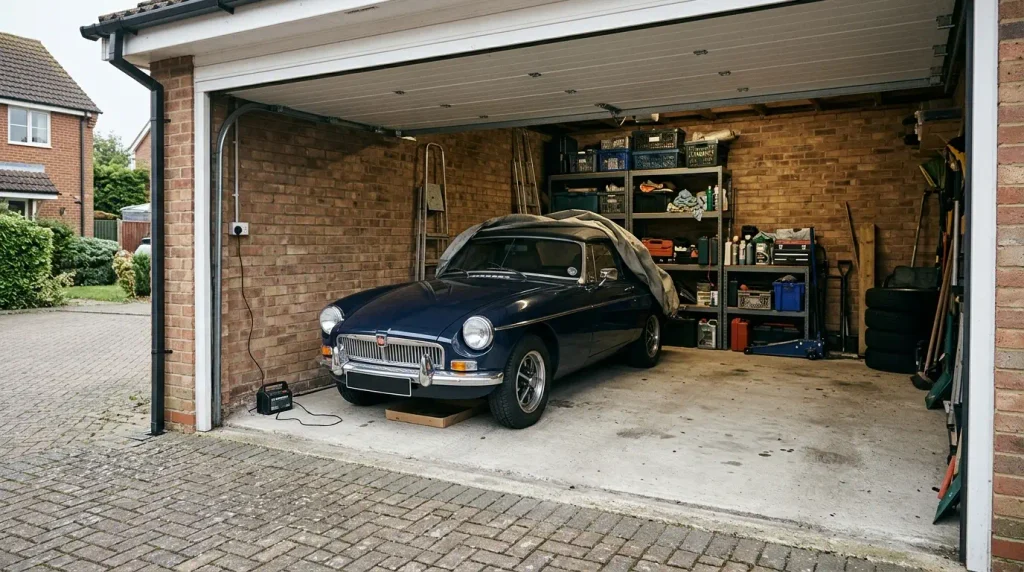
A private driveway is private land, but that doesn’t give you a free pass. CIE applies to vehicles that are kept, wherever they’re kept. So an uninsured car on your driveway or in your garage is still an offence unless you’ve declared a SORN.
If the car isn’t being used, the simplest fix is to make a SORN online. It’s free, and it takes a couple of minutes.
Mandatory Post-Accident Duties
If you’re involved in an accident, you’ve got legal duties on top of the insurance itself. You need to stop and exchange details with anyone else involved. If you can’t, you should report the accident to the police as soon as possible and within 24 hours. And if someone’s been injured, you may need to produce your insurance certificate to the police within seven days.
Tell your insurer too, even if you don’t plan to claim. Most policies expect it, and failing to report can cause problems later. Lancashire Constabulary has a clear summary of what to do.
Legal Exemptions: When You Do NOT Need Insurance
Statutory Off Road Notification (SORN) Rules
A SORN tells the DVLA your vehicle is off the road, and it removes the requirement to insure it. The catch is that the vehicle really must stay off the road.
Under GOV.UK’s SORN rules:
- A SORN vehicle can only go on a public road to or from a pre-booked MOT or other test. Any other road use risks a fine of up to £2,500.
- Taxing the vehicle again cancels the SORN automatically.
- Keep it on private land, such as a driveway or garage, and never on a public road or accessible parking space.
The Pre-31 January 1998 Exemption
There’s a rarely-used exemption for very old vehicles. If a vehicle has been off the road continuously since before 31 January 1998, with no tax or SORN activity since, it falls outside CIE. The AA’s guide to Continuous Insurance Enforcement covers it. It’s a narrow rule, so don’t rely on it unless you can prove the history.
The “Between Keepers” & Sold-to-Trade Transfer Exemption
A vehicle isn’t caught by CIE while it’s between registered keepers, or while it’s registered “in trade” with a motor dealer. For this to work, the DVLA needs to know about the change, usually through the keeper change or sold-to-trade notification.
One limit is worth noting. GOV.UK says vehicles a trader keeps for their own use aren’t excluded. Details are on the uninsured vehicles page, and the steps for sellers are covered in GOV.UK’s guide to selling a vehicle privately.
Scrapped, Stolen, or Exported Vehicles
If a vehicle has been scrapped, stolen or permanently exported, the exemption applies once the DVLA’s records show it. A stolen vehicle also needs to have been reported. Until that’s recorded, the DVLA can still treat you as the keeper of an uninsured car, so don’t skip the paperwork.
The MIB/DVLA Enforcement Sequence, Penalties & MID Record-Lag
The Enforcement Sequence (Insurance Advisory Letter to Prosecution)
You don’t have to be stopped by a police officer to get caught. The MIB compares DVLA keeper records with the Motor Insurance Database (MID), and if a taxed vehicle doesn’t appear as insured, the keeper gets an Insurance Advisory Letter.
The sequence usually runs like this:
- Insurance Advisory Letter: a warning telling you to insure the vehicle or declare a SORN.
- Fixed penalty: if you ignore it, a £100 fixed penalty follows. Some guidance says this drops to £50 if you pay quickly, though that figure isn’t on GOV.UK’s page, so check your letter.
- Enforcement action: the vehicle can be clamped, impounded or even destroyed.
- Court: if it goes to court, the fine can be up to £1,000.
The MIB says it sends up to 3,000 letters a day to uninsured keepers. If one lands on your doormat and you’ve already insured the car, jump to the MID record-lag section below.
Penalties Breakdown: Keeper Offence vs. Driving Offence
| Keeper offence (CIE) | Driving offence | |
|---|---|---|
| Fixed penalty | £100 | £300 and 6 penalty points |
| Court | Fine of up to £1,000 | Unlimited fine, possible disqualification |
| Other action | Clamping, impounding or destruction | Vehicle seizure |
These are the current figures on GOV.UK. There’s also a government consultation on tougher motoring penalties, which ran in early 2026. See the consultation page for updates, because the numbers could change.
Police Seizure Economics & Disposal Rules
Police can seize an uninsured vehicle on the spot under section 165A of the Road Traffic Act 1988. To get it back, you’ll generally need to prove it’s insured and pay removal and storage charges. And if nobody claims it, it can be sold or crushed after 14 days.
That’s a lot more expensive than a policy. Essex Police explain how seized vehicles are handled, including how quickly you need to act.
The MID Record-Lag Trap
Here’s the frustrating one. Insurers don’t always update the MID the moment you buy or renew. If the record lags, a perfectly valid policy can show as uninsured on a police ANPR camera, and you might even get an Insurance Advisory Letter for a car you’ve insured.
To protect yourself:
- Check your vehicle on askMID as soon as a policy starts or renews.
- If it’s missing, contact your insurer straight away and ask them to correct it.
- Keep your policy documents handy in case you’re stopped.
As a guide, the AA says it can take a couple of days for new details to show up. If you’re stopped at the roadside, the MIB’s police helpline can usually resolve it. There’s more detail in MIB’s article on data-loading delays.
Common Everyday Driving Traps & Myths
The “Insurance Needed to Tax” Contradiction (GB vs. Northern Ireland)
You’ll see many websites claim you can’t tax a car without insurance because the DVLA checks automatically. For England, Scotland and Wales, that’s out of date. The DVLA stopped requiring an insurance check at tax time in 2013.
That doesn’t mean it’s safe, though. The DVLA still matches its records against the MID, so taxing an uninsured car in Great Britain is likely to trigger CIE penalties soon after.
Northern Ireland is different. There, you’re expected to show proof of insurance when you tax a vehicle, so you can’t treat the two systems as the same.
Driving Other Cars (DOC) & Borrowing Myths
Driving Other Cars cover isn’t a safety net you can count on. According to the MIB, it’s no longer automatic on many policies, and when it’s included it’s usually third-party only and meant for emergencies. It also often comes with conditions, and it typically doesn’t cover a car owned by, or kept at the address of, the policyholder.
So borrowing your partner’s car on your own policy is a classic trap. And as the MIB’s myths page points out, “the car is insured” is no defence if you aren’t covered to drive it.
Driving to an MOT Test & Dealership Drive-Away
You need valid insurance to drive to a pre-booked MOT, and to drive a new car home from a dealership. There’s no legal grace period for either.
A SORN vehicle is allowed on the road to get to a pre-booked MOT, but that’s a permission from the SORN rules, not from the insurance rules. You still need cover for that journey, so arrange short-term insurance if needed.
Driving in Europe Post-Brexit
You no longer need a green card to drive in the EU, including Ireland, plus Andorra, Bosnia and Herzegovina, Montenegro and several other European countries. GOV.UK’s driving abroad page has the current list, and a few countries still require one.
Still, check your policy for foreign-use cover before you travel, and carry your insurance documents with you. Some policies limit the number of days abroad or the level of cover outside the UK.
Niche Vehicle Categories & Specialist Cover
Imported Vehicles Sequence
Importing a vehicle follows a fixed order. According to GOV.UK’s importing vehicles guidance, you generally need to:
- Tell HMRC within 14 days of the vehicle arriving.
- Pay any VAT and duty.
- Get the vehicle approved, where required.
- Register and tax it with the DVLA.
- Insure it before driving it on UK roads.
The sticking point is insurance. Many standard insurers want a UK registration number before they’ll quote, which you won’t have yet. That’s when specialist import cover, often based on the chassis number, comes in. Always check the exact order for your case, because it differs slightly depending on how the vehicle arrives.
Q-Plates, Kit Cars & IVA Approvals
A Q-plate is issued when a vehicle’s age or identity can’t be established. You can read how that works on GOV.UK. Kit cars and some custom builds need Individual Vehicle Approval (IVA) before they can be registered.
Standard insurers don’t always cover these vehicles, so expect to use a specialist kit car or classic insurer. The RAC’s guide to Q-plate insurance explains the options.
Trade Plates & Motor Trade Road-Risk Cover
Motor traders can drive unlicensed vehicles on the road using DVLA trade plates, but there’s a catch. Under GOV.UK’s trade plate rules, the plates can only go on roadworthy vehicles that are insured and have an MOT or exemption. The application needs a motor trade insurance certificate, so a standard policy won’t be accepted.
Laid-Up / Storage Cover for SORN Vehicles
A SORN removes the legal need for insurance, but your car can still catch fire or be stolen from a garage. That’s what laid-up cover is for. It’s an optional policy that protects a stored vehicle without any road risk cover. Specialist insurers such as Footman James offer it, and it’s popular with classic car owners.
Frequently Asked Questions (Top-10 UK Search Intent Block)
When must your vehicle have valid insurance cover in the UK?
Your vehicle must be insured whenever it’s driven or used on a road or public place, and whenever it’s kept without a SORN. That applies even if it’s parked, broken down or not being driven. The only usual exceptions are a SORN and specific exemptions like being between keepers.
Can I keep an uninsured car on my driveway or in a garage?
Only if you’ve declared a SORN. A private driveway or garage doesn’t exempt you from Continuous Insurance Enforcement. Without insurance or a SORN, the keeper can be fined even if the car never leaves the drive.
Do I need insurance to tax my car in Great Britain vs Northern Ireland?
In England, Scotland and Wales, the DVLA stopped checking for insurance at tax time in 2013, so you can technically tax an uninsured car. But you’ll still be exposed to CIE penalties. In Northern Ireland, you’re expected to show proof of insurance when you tax a vehicle.
Do I need insurance to drive my car to a pre-booked MOT test?
Yes. There’s no MOT grace period for insurance. Even a SORN vehicle, which can legally travel to a pre-booked MOT, still needs cover for that journey.
What happens if I’m caught driving without insurance in the UK?
You can get a £300 fixed penalty and 6 penalty points. If it goes to court, you could face an unlimited fine and disqualification. The police can also seize the vehicle, and it may be crushed if it isn’t claimed.
What is Continuous Insurance Enforcement (CIE) and how does DVLA enforce it?
CIE is the rule that a vehicle must be insured at all times unless it has a SORN. The MIB compares DVLA records with the Motor Insurance Database and sends an Insurance Advisory Letter to keepers whose vehicles aren’t insured. If you ignore it, you can face a £100 penalty, clamping or a court fine of up to £1,000.
Why does my car show as uninsured on askMID when I have a valid policy?
Usually it’s a delay or an error in your insurer’s data upload to the MID. Check askMID again after a day or two, then contact your insurer and ask them to correct the record. Keep your policy documents with you in case you’re stopped.
Am I insured to drive someone else’s car under my own policy?
Probably not. Driving Other Cars cover isn’t standard any more, and when included it’s usually third-party only and for emergencies. It typically doesn’t cover cars owned by or kept at your address, so check your policy documents before you borrow a car.
What insurance do I need when buying or selling a car?
As a buyer, you need cover in place before you drive away, and short-term drive-away insurance is a common way to do that. As a seller, tell the DVLA you’ve sold the vehicle so the keeper change is recorded. Don’t cancel your policy until the sale is complete and the DVLA has been told. GOV.UK explains the seller’s steps.
What is a SORN and does taxing a car automatically cancel it?
A SORN, or Statutory Off Road Notification, tells the DVLA a vehicle is off the road and won’t be driven or parked on public roads. Yes, taxing the vehicle cancels the SORN automatically, so you’ll need to insure it again before it goes back on the road. You can make a SORN through GOV.UK.
This guide is general information, not legal or insurance advice. Penalties and rules can change, so check GOV.UK before you act.